
Interiors & living · · 6 min read · By Sorrel Buildcon
Monsoon Waterproofing for a Terrace or Balcony
Quick answer
Monsoon waterproofing is mostly maintenance, not construction. Before the rains, clear every drain outlet, check that water actually flows to it, lift planters onto stands, inspect the joint where the floor meets the parapet, and reseal door thresholds. During the rains, watch for standing water and damp patches on the ceiling below, and report seepage in writing as soon as you see it.
What actually causes leaks after the first heavy rain
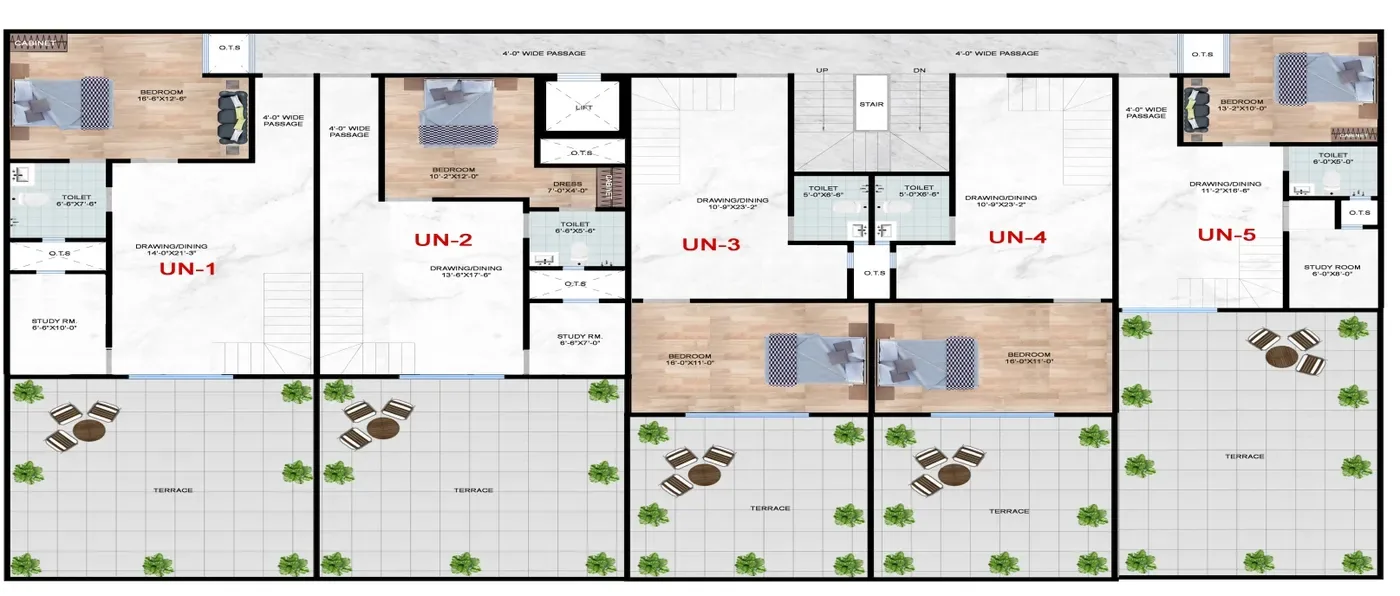
Monsoon terrace care is mostly about six small places. Water almost never gets through sound concrete. It gets in at edges, joints and blockages. In a new flat in Greater Noida West, the usual suspects are a choked drain outlet, a planter sitting flat on the floor holding a permanent wet patch, an unsealed gap where the balcony door frame meets the floor, and a hairline crack at the junction between the floor and the parapet wall. Monsoon waterproofing therefore means paying attention to about six small locations rather than treating the whole slab.
The second cause is time. A membrane or coating does its job for years, but only if nobody chisels into it, nobody lays a soil bed over it, and nobody lets a drain stay blocked for a fortnight. Most of what follows is about protecting work that has already been done.
The pre-monsoon checklist, in order
- Clear every outlet. Remove the grating, take out leaves, silt, cement crumbs and hair. Refit the grating.
- Pour a bucket of water at the far corner and watch it travel. It should reach the outlet in under two minutes with no lingering puddle.
- Lift all planters onto stands or feet, and sweep and dry the floor underneath.
- Inspect the floor-to-parapet joint all round for hairline cracks or lifted grout; note anything you find.
- Check door thresholds for gaps; reseal with a suitable exterior-grade sealant.
- Look at the underside of the parapet coping for cracks that let water enter the wall from the top.
- Test the balcony door drainage groove if there is one; clear it with a thin brush.
- Move or cover outdoor furniture, and take cushions and electrical items inside.
Two hours of monsoon terrace care in June saves a repainting job in September.
Slope, ponding and why a 1:100 fall matters
A terrace or balcony floor is not meant to be level. It is laid with a gentle fall towards the outlet — typically something in the range of 1 in 80 to 1 in 120, which is a drop of roughly 10 mm per metre. That is barely noticeable underfoot but it is the difference between water leaving and water sitting.
Ponding — water standing more than about 3 mm deep an hour after the rain stops — is the warning sign to act on. It concentrates moisture in one place, breeds mosquitoes, stains the floor and eventually finds a way into the joint. If you see repeated ponding in the same spot, photograph it with a coin for scale, note the date and raise it with the maintenance team rather than trying to build up the floor yourself, which usually makes the fall worse.
Reading the warning signs early
| What you see | Likely cause | What to do |
|---|---|---|
| Water standing after rain | Blocked outlet or flat patch | Clear the drain; photograph and report if it repeats |
| Damp patch on the ceiling below | Seepage through a joint or crack above | Report in writing immediately with photos and date |
| Paint bubbling at skirting level | Water travelling along the floor-wall joint | Check the joint outside; do not just repaint |
| White powdery deposit on the wall | Efflorescence — salts carried by moisture | Trace the moisture source before cosmetic repair |
| Grout washing out of tile joints | Constant wetting, poor grout | Regrout with exterior-grade grout in dry weather |
| Musty smell in a closed room | Slow seepage behind furniture | Move furniture, dry the wall, inspect the wall outside |
Report early and in writing. A damp patch photographed in July is a maintenance item; the same patch raised in October after the plaster has failed is an argument.
Protecting the terrace if you keep plants
Plants and waterproofing can live together, but only on your terms. The rules are short and they matter.
- Never lay a soil bed straight onto the slab. Keep everything in containers.
- Every container sits on a stand or on 50 mm feet, so air passes underneath and the floor dries.
- Keep a clear 1-ft ring around each drain outlet — no pots, no mats, no watering can.
- Do not drill into the terrace floor for pergolas, trellises or railing extensions; fix to the parapet only with approval.
- Move pots away from the parapet base during the monsoon, since that joint is the most vulnerable line on the terrace.
- Trim overhanging plants before the rains so leaves do not end up in the drain.
Our duplex terrace garden ideas cover planter choice and weight; this checklist covers keeping the slab underneath them dry.
During the rain, and straight after
During heavy rain, do one walk-through while it is actually pouring. This is the only time you can see where water collects, which way it runs and whether an outlet is coping. Check the balcony floor, the door threshold and the ceiling of the room below. Keep a torch handy for dark corners.
Once it stops, sweep standing water towards the outlet, wipe the threshold dry, and open the doors for an hour so the area ventilates. After a long spell of rain, scrub off any moss or algae on the floor with a stiff brush and a mild detergent — wet moss on a smooth tile is genuinely slippery, and a fall is a bigger risk than a leak. Premium tiles clean easily; our premium tiles care guide covers what not to use on them.
What the building does, and what you do
Structural waterproofing, terrace treatment, common-area drains and rainwater downtakes are the building's responsibility, handled during construction and then through maintenance. Sorrel Buildcon lists brands including UltraTech, Ambuja Cement, Birla White, Tata Steel, Rathi Steel and AKG among the materials used — see the material brands explained and the quality page.
Your share is the part inside your home: keeping your balcony and terrace drains clear, not altering the floor, using pot stands, resealing your own door thresholds, and reporting seepage promptly. If you are taking possession just before a monsoon, add these checks to your handover walk — see the possession handover checklist and how to make a snag list.
Ask about specifications and see it yourself
The best time to ask about monsoon terrace care and waterproofing is before you book, not after the first shower. On a site visit, ask where the terrace and balcony outlets are, how the floor falls towards them, and how the parapet coping is finished.
Sorrel Heights is at Novelty Green, Jalpura, Greater Noida West, and the duplex homes include an open terrace. Read the specifications, check the layouts on the floor plans and the duplex homes page, look through the FAQ, and book a site visit to walk the terrace and see the drainage for yourself.
Signs of seepage
- Damp patches on the ceiling below a terrace.
- Paint bubbling near balcony doors.
- A musty smell in cupboards on outer walls.
Report early; small issues are cheaper to fix.
Yearly routine for duplex owners
- March–April: inspect terrace surface and joints.
- May: clean drains, lift pots.
- June–September: check after heavy rain.
- October: clean moss, repaint rust spots on railings.
Air-conditioner drain pipes
Point AC drain pipes into a drain, not onto the balcony floor, to avoid constant damp in one corner.
Facts about Sorrel Heights on this page come from the official brochure and Sorrel Buildcon. General guidance is for information only — confirm rules and rates with the relevant authority before you act.