
Interiors & living · · 4 min read · By Sorrel Buildcon
Home Interior Budget Planning for a New Flat
Quick answer
Smart home interior budget planning starts by fixing a total (many buyers keep aside roughly 8–15% of the flat's cost), listing what the builder already provides, then spending first on essentials — wardrobes, lights, fans, curtains, beds — and later on décor. Split the budget room by room, keep a 10% buffer for surprises, and get at least two itemised quotes.
Why home interior budget planning should start before possession
Many buyers pour everything into the down payment and EMI, then move in with no money for wardrobes or curtains. Good home interior budget planning starts on the day you book, so the interior fund grows alongside construction. It also belongs in your overall cost picture — read the total cost of buying a flat and EMI planning together with this guide.
Step 1: List what the builder already gives
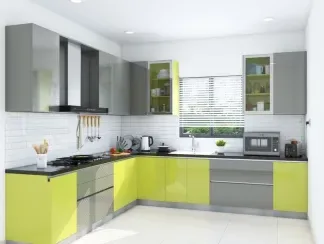
Every rupee the builder covers is one you do not spend twice. At Sorrel Heights, the listed specifications include premium tile flooring, a designer false ceiling in all rooms, a modular kitchen with granite or marble counter, Cera or equivalent fittings with sensor lights in toilets, a smart lock on the front door and a smart motion-detection camera. That removes the costliest civil work — flooring, ceilings and a base kitchen — from your list. Confirm the final list on Sorrel Heights specifications and in your agreement.
Step 2: Split the budget into three phases
| Phase | What it covers |
|---|---|
| Phase 1 — Move-in essentials | Beds and mattresses, wardrobes, curtains, fans and lights, RO, geyser, basic kitchen appliances, AC for bedrooms |
| Phase 2 — Comfort (within 6–12 months) | Sofa, dining set, TV unit, study desk and chair, shoe rack, balcony furniture |
| Phase 3 — Style (later) | Wallpaper, feature walls, art, rugs, décor lighting, terrace makeover |
Spend on Phase 1 fully, then let the others follow savings. This avoids a personal loan for sofas.
A sample room-wise split
- Wardrobes and storage: often the largest single item, around 30–35% of the fund.
- Appliances (AC, fridge, washing machine, RO, geyser): about 20–25%.
- Loose furniture (beds, sofa, dining, desk): about 20–25%.
- Lighting, fans, curtains and blinds: about 10%.
- Décor and plants: about 5%.
- Buffer: 10% for surprises.
These are only starting ratios; a family that already owns furniture will spend more on wardrobes, while a first-home couple may need everything.
Fixed vs loose furniture
Built-in (fixed) furniture like wardrobes and TV units fits the room exactly but stays behind if you move. Loose furniture travels with you. A simple rule: build in only what saves floor space — wardrobes, a study desk with overhead shelves, a shoe cabinet. Buy the rest loose. In the 3BHK Type B, the dressing area already gives you a hanging and storage zone, so the bedroom wardrobe can be smaller — see wardrobe and dressing area planning.
Hidden costs to include
- Designer or contractor fees (percentage or flat).
- Electrician work: extra points, fan hooks, AC wiring.
- Carpenter's hardware — hinges, channels, handles — often quoted separately.
- Transport, loading and lift protection on moving day.
- Society move-in charges, if any.
- Deep cleaning after work ends.
- GST on designer and modular furniture bills.
How to save without regret
- Get itemised quotes: carcass material, shutter finish and hardware brand for every unit.
- Choose laminate over acrylic or PU for most shutters; save the premium finish for one feature.
- Standardise sizes — one wardrobe design across bedrooms is cheaper.
- Buy appliances during festival sales.
- Don't redo what the builder gave you in good condition.
One more habit helps: open a separate savings account or recurring deposit just for interiors on the day you book, and move a fixed amount into it every month until possession. By the time you get the keys, the Phase 1 fund is ready and you are not choosing between curtains and the first full EMI.
Linking interior budget to your home choice
Bigger homes cost more to furnish. A 2BHK + Study of 1280 sq.ft needs far less than a 4BHK duplex of 2650 sq.ft with a terrace. Sorrel Heights homes are priced approx. under ₹50 lakh (2BHK + Study), ₹60–70 lakh (3BHK) and under ₹1 crore (duplex), as shared by Sorrel Buildcon and revised from time to time. Add your interior fund on top when deciding — see upgrading from 2BHK to 3BHK.
Plan your total budget with us
Get the current indicative price list & payment plan sheet, look at room sizes on Sorrel Heights floor plans (including the duplex homes with terrace homes), and book a visit to see what is already built in so your home interior budget planning starts from real numbers.
Facts about Sorrel Heights on this page come from the official brochure and Sorrel Buildcon. General guidance is for information only — confirm rules and rates with the relevant authority before you act.